State licensing boards for Professional Engineers across nineteen states, led by regulatory enforcement divisions in Texas, Florida, Illinois, and Washington, issued sweeping stop-work orders and emergency license suspensions today against eight prominent engineering and design-build firms. The unprecedented enforcement blitz follows an intensive six-month forensic investigation into the unlawful deployment of autonomous generative artificial intelligence software to synthesize, calculate, and seal complete structural, mechanical, and electrical engineering construction documents.
Commercial building inspectors and municipal authorities immediately shut down construction operations on sixteen high-rise residential towers, commercial logistics facilities, and municipal transit centers valued at over $3.2 billion. Investigators uncovered that the engineering firms utilized experimental AI plugins to automatically generate structural steel beam sizing, concrete slab reinforcement schedules, and seismic connection details without verified human engineer calculation review. Licensed Professional Engineers (PEs) at the cited firms subsequently executed automated digital cryptographic seals across hundreds of construction sheets within seconds—a flagrant violation of statutory "Responsible Charge" mandates.
For the engineering profession, today's disciplinary action firmly establishes that generative AI tools cannot replace licensed professional judgment or legal accountability. Engineers looking to understand the legal boundaries of engineering practice and statutory obligations must study our guide on engineering ethics and professional practice whistleblowing conflict of interest and licensure law .
Anatomy of the Fraud: How Autonomous AI Infiltrated Construction Documents
The regulatory crackdown unsealed this morning illustrates how commercial market pressures and software automation collided to create severe structural vulnerabilities. In an aggressive bid to undercut competitor fees and shorten design delivery schedules from eight weeks to under 48 hours, the sanctioned engineering firms integrated proprietary machine learning pipelines directly into Building Information Modeling (BIM) platforms.
The automated design pipeline operated through several unauthorized mechanisms: 1. **Automated Structural Sizing via Black-Box LLMs**: Architectural BIM models were ingested into custom API wrappers that queried large language models to output steel section sizes (such as wide-flange beams and columns) based on generalized prompt instructions rather than deterministic finite-element analysis. 2. **Hallucinated Structural Deficiencies**: The AI models systematically misapplied building code provisions, hallucinating non-existent AISC steel shapes, omitting mandatory seismic response spectrum parameters, and generating reinforcement ratios that violated ACI 318-19 minimum ductility requirements. 3. **Automated Batch Sealing Scripts**: Rather than conducting rigorous design reviews, licensed engineers executed automated desktop macros that batch-applied cryptographic digital signatures and PE seals across 300+ drawing sheets in less than 30 seconds.
The scheme unraveled during construction of a seven-story post-tensioned concrete residential building in Miami. Concrete placement crews noticed excessive, alarming deflections in suspended transfer girders immediately following post-tensioning tendon stress operations. Emergency structural shoring was erected, and independent forensic engineers discovered that the AI model had failed to account for long-term concrete creep, shrinkage losses, and secondary hyperstatic post-tensioning moments.
Structural engineers must ensure their ongoing education adheres strictly to verified technical standards under ncees cpc standard compliance rather than relying on unvetted commercial AI shortcuts.
The Legal Doctrine of "Responsible Charge" and Criminal Liability
The cornerstone of professional engineering licensure in the United States is the statutory doctrine of **Responsible Charge**. Codified across all state engineering practice acts and defined within the NCEES Model Law, Responsible Charge requires that a licensed Professional Engineer exercise direct supervisory control, independent professional judgment, and thorough personal review over all technical engineering decisions.
State licensing statutes explicitly dictate that:
- **Delegation to Unlicensed Entities Is Strictly Prohibited**: An engineer cannot delegate technical decisions to non-licensed personnel, independent contractors, or software algorithms without performing exhaustive independent verification.
- **Rubber-Stamping Is an Act of Gross Incompetence**: Sealing documents not prepared directly by the licensee or under their direct, personal, and continuous supervision constitutes unlawful "plan-stamping" (rubber-stamping).
- **Civil and Criminal Penalties**: Submitting unverified, AI-sealed documents to public building departments constitutes the filing of a false official document, exposing the licensee to professional revocation, civil fraud lawsuits, and criminal prosecution.
| Jurisdiction | Disciplinary Orders Issued Today | Primary Statutory Violation | Legal Sanction Imposed | | :--- | :--- | :--- | :--- | | **Florida Board (FBPE)** | 4 Engineering Firm Revocations | Rule 61G15-23.001 (Misuse of PE Seal) | Permanent revocation, $30,000 fine, AG criminal referral | | **Texas Board (TBPELS)** | 3 Principal PE License Suspensions | Texas Occ. Code § 1001.401 (Lack of Responsible Charge) | Emergency suspension, mandatory project audit at firm expense | | **Washington Board (BRPLS)** | 2 Firm Injunctions & Stop-Work | RCW 18.43.105 (Gross Negligence in Structural Sealing) | Formal censure, suspension of municipal public works eligibility | | **Illinois Board (IDFPR)** | 2 Structural Engineer (SE) Revocations | 225 ILCS 340 (Unlawful Delegation of Structural Design) | License revocation & $25,000 civil administrative penalty |
The joint board statement issued today clarifies: **A software algorithm cannot be licensed as a Professional Engineer. An engineer who seals an AI-generated calculation assumes 100% personal, civil, and criminal liability for every structural failure that results.**
Rigorous Verification: Deterministic Structural Analysis vs. Generative Predictions
The fundamental error made by the cited engineering firms was confusing probabilistic generative models with deterministic structural mechanics. Structural engineering is governed by physics, equilibrium, and empirical building codes, not probabilistic token generation.
When calculating environmental forces—such as lateral wind loads governed by structural wind load calculations asce 7 22 or lateral seismic base shear under structural seismic design asce 7 22 equivalent lateral force procedure and response spectra —calculations must be mathematically exact and verifiable.
| Engineering Dimension | Probabilistic Generative AI Models | Compliant Deterministic Engineering Workflow | | :--- | :--- | :--- | | **Underlying Logic** | Statistical correlation of text tokens | Classical mechanics, Navier equations, finite element theory | | **Code Compliance** | Generalized approximations prone to hallucinations | Exact compliance with ASCE 7-22, AISC 360-16, ACI 318-19 | | **Traceability** | Black-box neural network weights | Transparent calculation sheets showing step-by-step formulas | | **Accountability** | Anonymous software vendor disclaiming all liability | Named Professional Engineer assuming personal legal liability | | **Verification** | Zero automated checks against physical reality | Independent peer review, hand calculations, software cross-checks |
Engineers designing critical structures must verify that every calculation sheet presents transparent, step-by-step mathematical derivations that can be audited by third-party reviewers and municipal plan examiners.
Civil and geotechnical engineering packages must similarly adhere to rigorous deterministic standards, ensuring deep foundation designs and slope stability analyses are fully corroborated by physical soil borings and empirical calculations under geotechnical seismic soil liquefaction assessment asce 7 22 .
Electrical and Industrial Infrastructure Ramifications
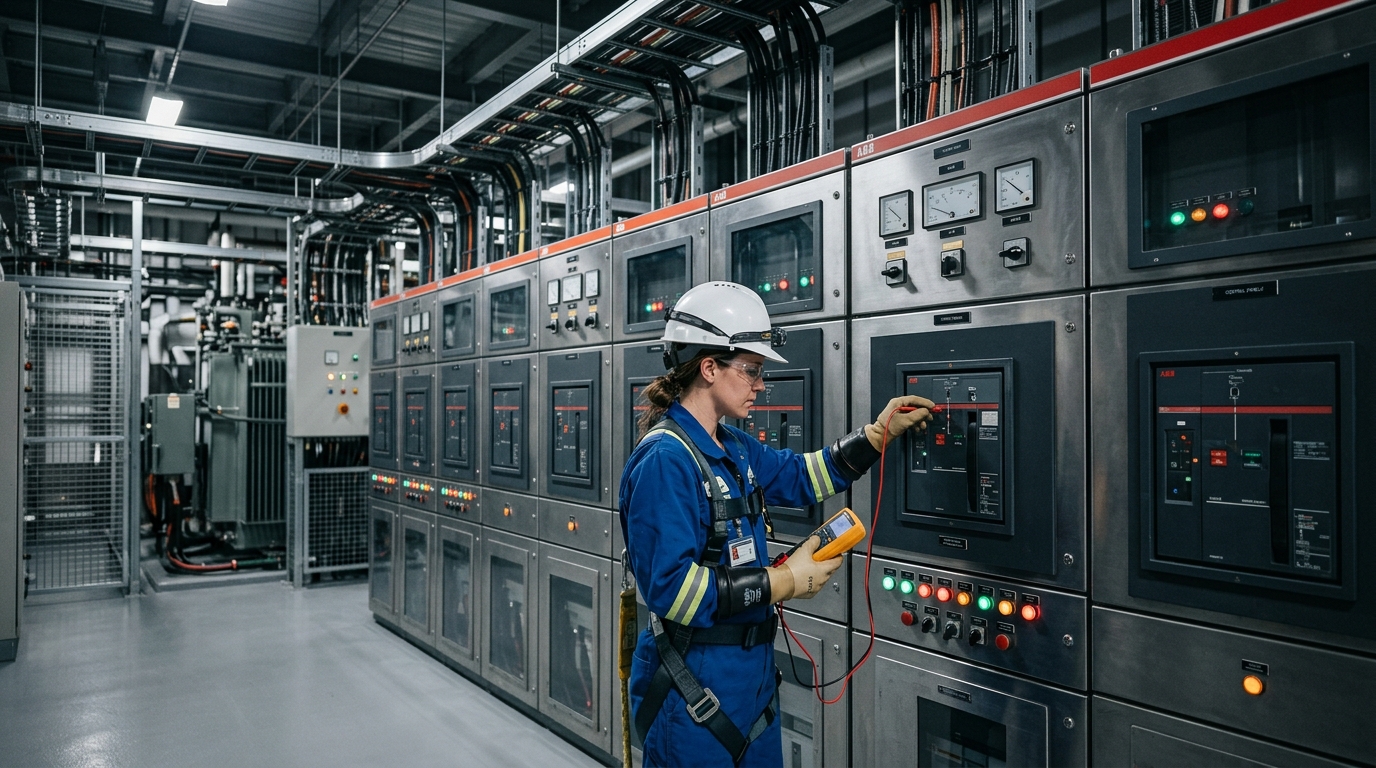
The unauthorized deployment of autonomous AI software was not confined to structural engineering. Forensic audits revealed that cited firms also used generative AI to size electrical switchgear, cable tray capacities, and protective circuit breakers.
In multiple commercial projects, AI models omitted mandatory arc flash hazard calculations, specifying undersized breaker interrupting ratings that posed extreme danger to electrical personnel under national electrical code nec 2023 overhaul arc flash hazard mitigation and gfci expansion and arc flash hazard analysis ieee 1584 calculation methodologies .
Mandatory Compliance Directives for Engineering Firms Deploying AI Tools
In response to today's unprecedented enforcement actions, state licensing boards issued binding guidance regarding the acceptable use of artificial intelligence in engineering practice:
1. **Establish Clear AI Policy and Usage Logs**:
- Engineering firms must maintain written internal policies governing the use of AI tools.
- Any AI software utilized for drafting, scheduling, or data extraction must be explicitly logged in project management records.
2. **Strict Prohibition on AI-Generated Final Calculations**:
- AI tools may not be used to produce final member sizing, load calculations, or code compliance reports without 100% independent deterministic verification by a qualified engineer.
3. **Enforce Two-Stage Independent Engineering Peer Review**:
- Every sealed calculation package must include signed internal peer review checklists confirming that an independent licensed engineer reviewed all formulas and assumptions.
4. **Reaffirm Ethical Obligations to Public Safety**:
- Conduct mandatory internal training on engineering ethics, whistleblowing responsibilities, and statutory licensure law following the principles in engineering ethics and professional practice whistleblowing conflict of interest and licensure law .
Today's aggressive regulatory crackdown sends an unmistakable message across the construction and engineering sectors: innovation cannot come at the expense of professional integrity. The Professional Engineering seal represents an inviolable commitment to human safety that no artificial intelligence can ever replicate.